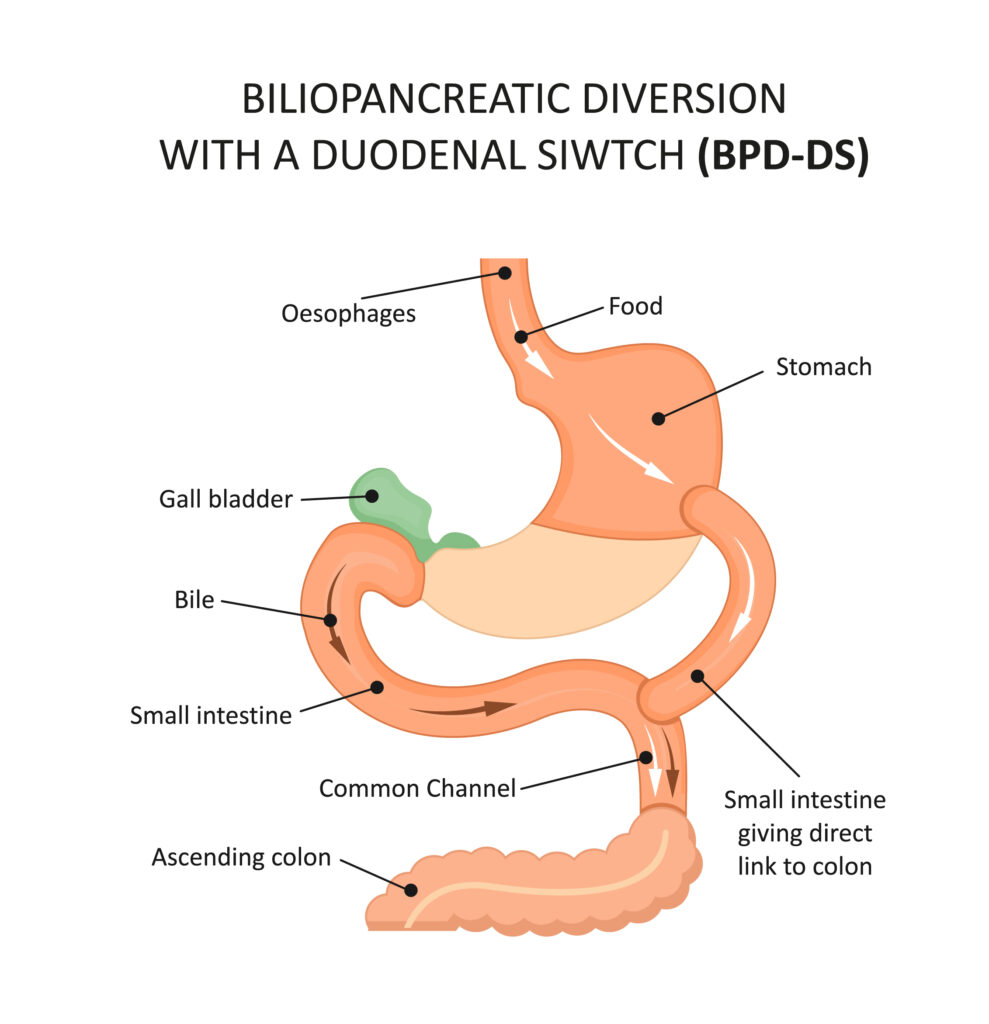
BPD/DS surgery—short for Biliopancreatic Diversion with Duodenal Switch—is one of the most powerful bariatric procedures available for those suffering from severe obesity. If you’ve struggled with weight loss despite trying traditional methods like diet, exercise, and medications, this surgery could offer a long-term solution not just for weight loss, but also for improving or even reversing serious obesity-related conditions such as type 2 diabetes, high blood pressure, and sleep apnea.
BPD/DS surgery combines two techniques: a sleeve gastrectomy, which reduces the size of the stomach, and an intestinal bypass, which limits the absorption of calories and nutrients. This dual approach makes it highly effective for significant and sustained weight loss. However, because of its complexity, BPD/DS also carries potential risks and requires lifelong dietary changes, medical monitoring, and nutritional supplementation.
In this article, we’ll explore how BPD/DS surgery works, who it’s best suited for, the pros and cons, and what to expect before and after the procedure. If you’re considering bariatric surgery and want the most comprehensive and effective option available, understanding BPD/DS could be the first step toward transforming your life and health.
Check Bariatric – Doral Health & Wellness NY to know more about weight loss options and expert bariatric care.
Why BPD/DS surgery is done?
Your doctor might recommend bariatric surgery such as a duodenal switch
- if you suffer from severe obesity and are on the verge of developing complications such as high blood pressure, high blood sugar, heart disease, severe sleep apnea, type 2 diabetes, stroke, and even infertility.
- If your BMI (Body Mass Index) is 40 or higher or if you have a BMI of 35 with one of the above mention complications.
- And you are not able to reduce your weight by making diet and lifestyle changes.
Besides this, the doctor asks that you follow dietary and lifestyle changes before and after the surgery so that you can get the maximum benefits of the surgery. Because even after the surgery, if you fail to follow the dietary and lifestyle changes you can again gain weight.
Risks
Like any other surgery, a BPS/DS causes several risks to health both in the long term and short term.
Short-term risks
- Excessive bleeding
- Blood clots
- Wound infection
- Lung or breathing problems
- Leaks in the gastrointestinal system
- Adverse reactions to anesthesia
Long-term risks
- Bowel obstruction
- Gallstones
- Hernias
- Low blood sugar
- Malnutrition
- Dumping syndrome (causes diarrhea, nausea, or vomiting)
- Ulcers
- Stomach perforation
However, these risks can rarely be fatal.
Benefits
- This bariatric surgery has the highest success rate of all other bariatric surgeries with the greatest overall weight loss.
- Improves your hunger, metabolism, blood lipid, or blood sugar levels in the long term.
- Total remission of type 2 diabetes.
- It keeps a slightly larger gastric sleeve than other bariatric procedures which allows you to eat slightly larger meals.
- Very rarely causes the dumping syndrome, so you don’t need to completely avoid sugar or fats.
- It can increase your life significantly by reducing the risk of death by any condition.
Recovery
Before returning home, you need to stay at the hospital for a few days and then several weeks at home before you are ready to go back to work. During your recovery, you notice several changes in your body such as rapid weight loss, fatigue, hormone swings, mood shifts, nausea, hair loss, body aches, and feeling cold.
You also need to follow strict dietary guidelines during recovery for what you should eat and how you should eat. Because your digestive system needs time to heal and adjust to recent changes. It takes one to two weeks to progress through each stage to go back to your normal diet.
Biliopancreatic diversion with duodenal switch surgery is similar to other bariatric surgeries. However, it has the highest success rate of other surgeries and a greater amount of weight loss. But it also involves some risk of nutritional deficiencies as well. It is used for severe obesity conditions. But if you follow proper guidelines and take supplements and regular testing for life, you might have those risks and better and long-lasting results from this surgery.
Want a weight loss plan, come to us. Walk in for an appointment at 1797 Pitkin Avenue, Brooklyn, New York 11212. Our bariatric and nutritionist specialists can make effective weight loss plans according to your body’s requirements. Doral Health & Wellness has an advanced bariatric clinic that offers laparoscopic surgeries in bariatrics including Gastric sleeve surgery, Gastric bypass surgery, and Sleeve gastrectomy.
Call us at 1-347-384-5690 to schedule a consultation.