Syphilis is often called “The Great Imitator” because its symptoms can look like many other diseases. This makes it tricky to diagnose without a test. While most people are aware of the initial sore that marks the beginning of the infection, fewer understand what happens next. If left untreated, the infection progresses to a new phase known as secondary syphilis. This stage brings a new wave of health issues that are easy to overlook or mistake for something else. In this guide, we cover everything you should know about secondary syphilis, from recognizing the warning signs to finding the right medical care. Reach out to us on https://doralhw.org/contact-us/ for a consultation with the best infectious disease doctors in Brooklyn, New York.
What is secondary syphilis?
Secondary syphilis is the second stage of the syphilis infection. It typically develops weeks or even months after the initial chancre (sore) has healed. During the primary stage, the bacteria remain localized at the site of entry. However, in the secondary stage, the bacteria (Treponema pallidum) have spread into the bloodstream, allowing the infection to manifest throughout the body.
This stage is critical because the infection is highly contagious. The rash and sores that appear during this time can easily transmit the bacteria to others through direct contact. Understanding this progression is a key part of everything you should know about secondary syphilis to protect yourself and your partners.
Recognizing Secondary Syphilis Symptoms
The symptoms of this stage can vary widely from person to person. They often appear while the primary chancre is healing or several weeks after it has disappeared. Because these signs can be mild, many people don’t realize they are infected.
The Characteristic Rash
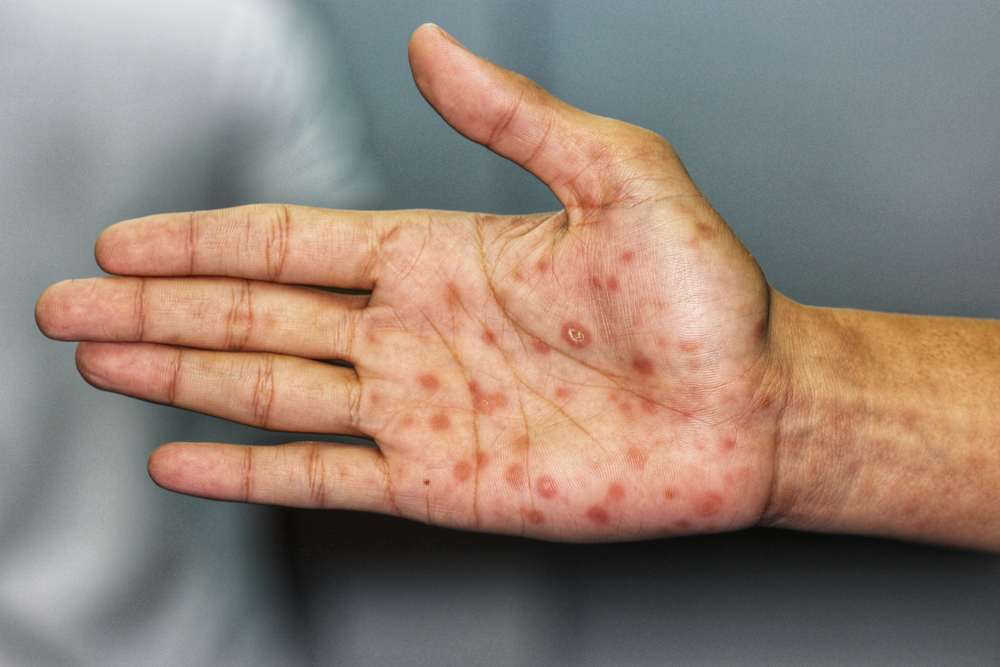
The most common and distinctive sign is a skin rash. Unlike other rashes, secondary syphilis symptoms often involve a rash that:
- Does not itch.
- Appears rough and red or reddish-brown.
- Shows up on the palms of the hands and the bottoms of the feet (a rare location for most other rashes).
- It can also appear on the chest, back, or face.
Other Flu-Like Symptoms
Because the bacteria are systemic (throughout the body), you may feel generally unwell. Other symptoms include:
- Fever: Low-grade fevers are common.
- Swollen Lymph Nodes: You may feel lumps in your neck, groin, or armpits.
- Sore Throat: A persistent sore throat that doesn’t go away.
- Patchy Hair Loss: Sudden loss of hair from the scalp, eyebrows, or beard.
- Fatigue and Headaches: Feeling unusually tired or having constant headaches.
- Mucous Patches: Sores in the mouth, vagina, or anus.
If you notice these signs, especially a rash on your palms or soles, you should consult an infectious disease specialist immediately. Ignoring these symptoms won’t make the infection go away; it will only push it into the latent (hidden) stage.
Diagnosis and Treatment
The good news is that secondary syphilis is completely curable. The diagnosis usually involves a simple blood test to look for antibodies. Sometimes, a doctor may take a sample of fluid from a sore to look for the bacteria under a microscope.
The Cure
The standard treatment is an injection of penicillin. For most patients in the secondary stage, a single dose of long-acting benzathine penicillin G is sufficient to kill the bacteria and stop the progression of the disease. If you are allergic to penicillin, your doctor can prescribe an alternative antibiotic.
Getting treated by a qualified provider at our infectious disease clinic in Brooklyn, NY, ensures that the infection is properly managed. They will monitor your blood levels after treatment to ensure the cure was successful.
Why You Need a Specialist
While general practitioners can treat syphilis, seeing an expert can provide peace of mind. An infectious disease specialist understands the nuances of STIs and can screen for co-infections like HIV, which often travels together with syphilis.
A specialized infectious disease clinic in Brooklyn, NY, provides a confidential environment where you can discuss your sexual health history without judgment. They can also assist with partner notification services, which are crucial to stop the spread of infection within the community.
Secondary syphilis is a serious health concern, but it doesn’t have to be a permanent one. By recognizing the secondary syphilis symptoms early—such as that tell-tale rash—you can get the treatment you need before the disease causes long-term damage.
We hope this guide has covered everything you should know about secondary syphilis and empowered you to take action. If you have any doubts or symptoms, reach out to a professional today. Contact a trusted infectious disease clinic in Brooklyn, NY, to schedule your screening and take control of your sexual health. Book your appointment now, call us on + 1-718-367-2555 to get treated! Learn more about infectious diseases at www.doralhw.org. and stay up to date on current health topics and new research, on recent infectious diseases like COVID-19. If you need help, register your information and make direct contact with our doctors at https://yuz88hfiyh7.typeform.com/Doralintake. Or visit us at 1797 Pitkin Avenue, Brooklyn, NY 11212.