
Foot and ankle injuries, especially those involving tendons and ligaments, can be notoriously slow to heal. For athletes and active individuals, this can mean a long and frustrating time on the sidelines. Fortunately, regenerative medicine offers innovative solutions. PRP therapy for foot tendon and ligament repair is a cutting-edge treatment that harnesses your body’s own healing power to accelerate recovery. Understanding this therapy, from the specifics of PRP ligament treatment to the average PRP tendon recovery time, can help you decide if it’s the right choice for your injury. Get a consultation with the best Podiatrists in Brooklyn.
What is PRP Therapy and How Does It Work?
Platelet-rich plasma (PRP) therapy is a procedure that uses a concentration of a patient’s own platelets to speed up the healing of injured tissues. Platelets are components of your blood that are rich in growth factors—proteins that are crucial for tissue repair and regeneration.
The process is simple and is performed in a clinical setting.
- Blood Draw: A small amount of your blood is drawn, similar to a routine blood test.
- Centrifugation: The blood is placed in a centrifuge, a machine that spins at high speed to separate the blood components. This process isolates the platelets and plasma from the red and white blood cells.
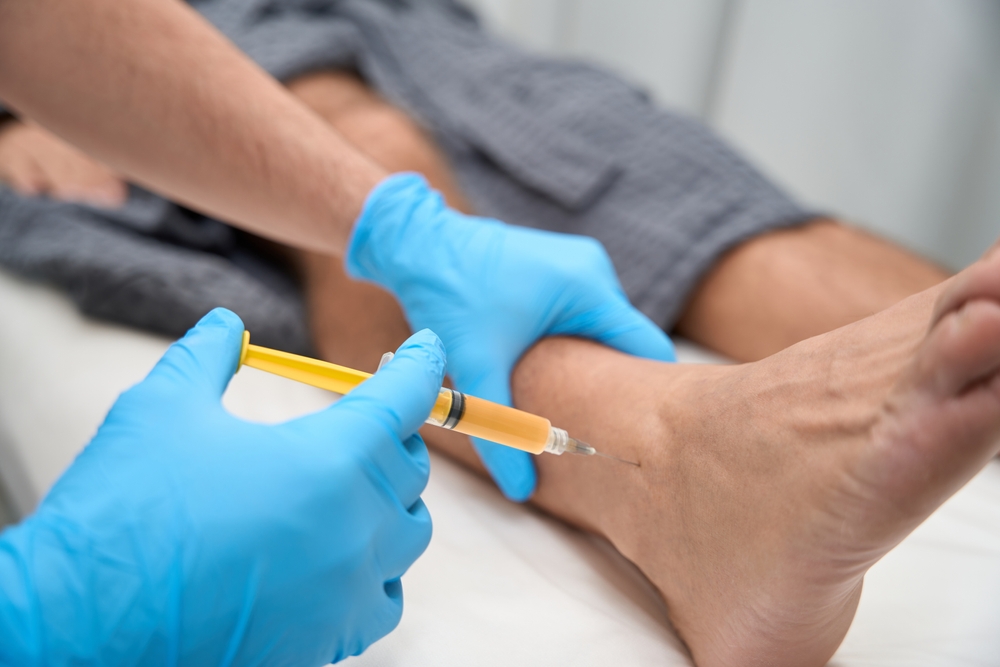
- Injection: The resulting platelet-rich plasma is then carefully injected directly into the site of the injured tendon or ligament under ultrasound guidance to ensure precise placement.
By delivering a high concentration of growth factors directly to the injury, PRP therapy stimulates and enhances the body’s natural healing cascade.
Applications of PRP Therapy for Foot Tendon and Ligament Repair
Tendons and ligaments on the foot have a limited blood supply, which is why they often heal slowly or incompletely. PRP is an effective solution for many common and painful conditions affecting these tissues. A skilled podiatrist can determine if you are a good candidate for this treatment.
Common Conditions Treated with PRP
- Plantar Fasciitis: This is one of the most common causes of heel pain, involving inflammation and degeneration of the thick band of tissue (plantar fascia) that runs across the bottom of your foot. PRP can help repair the damaged fascia and reduce inflammation.
- Achilles Tendinopathy: This condition involves pain and stiffness along the Achilles tendon. Whether it’s tendinitis (inflammation) or tendinosis (degeneration), PRP can promote healing in the damaged tendon fibers.
- Ankle Sprains and Ligament Tears: For chronic instability or incomplete healing after an ankle sprain, a PRP ligament treatment can help strengthen and repair the stretched or torn ligaments.
- Peroneal Tendonitis: The peroneal tendons run along the outside of the ankle and can become inflamed or torn due to overuse or injury. PRP can target this area to facilitate repair.
What to Expect: PRP Tendon Recovery Time and Process
One of the most common questions patients have are about the recovery timeline. While it varies depending on the individual and the severity of the injury, there is a general process to expect.
The Recovery Phases
- Initial Phase (First Week): Immediately following the injection, it is normal to experience some pain and swelling at the injection site as the inflammatory healing response begins. Your doctor will likely recommend rest, and you may be placed in a walking boot to protect the area.
- Regenerative Phase (Weeks 2-6): During this time, the concentrated growth factors are actively working to rebuild the tissue. You will typically begin a gentle physical therapy program to encourage proper tissue alignment and restore range of motion.
- Strengthening Phase (Weeks 6-12 and beyond): As the new tissue matures, physical therapy will focus on strengthening the tendon or ligament and gradually returning to normal activities.
The full benefits of PRP therapy are often realized over several months as the tissue continues to heal and remodel. The PRP recovery time is generally faster than it would be without intervention, but patience is key. Your podiatrist will create a personalized recovery plan for you.
Is PRP Therapy Right for You?
PRP therapy is a safe and effective option for many patients suffering from chronic foot and ankle pain who have not found relief with traditional treatments like rest, physical therapy, or corticosteroid injections. Because it uses your own blood, the risk of allergic reaction or disease transmission is eliminated.
However, it is not suitable for everyone. Individuals with certain bleeding disorders, active infections, or other specific medical conditions may not be good candidates.
The best way to find out if PRP is right for you is to consult with a specialist. A visit to a podiatry clinic in Brooklyn can provide you with a thorough evaluation and a clear diagnosis. An experienced podiatrist will review your medical history, perform a physical examination, and use diagnostic imaging to assess your injury before recommending a course of action.
If you are struggling with a persistent foot or ankle injury, don’t let it keep you from the activities you love. Explore your options with advanced regenerative treatments. Contact our podiatry department to learn more about PRP therapy for foot tendon and ligament repair and schedule a consultation to see if this innovative treatment can help you get back on your feet. At Doral Health & Wellness, we have Podiatrists with extensive education and expertise. Our address is 1797 Pitkin Avenue, New York, NY 11212. To make an appointment, please call + 1 718 367 2555, or register your information and make direct contact with us at https://yuz88hfiyh7.typeform.com/Doralintake or send an email to info@doralhw.org. You can also visit us at 1797 Pitkin Avenue, Brooklyn, NY 11212.