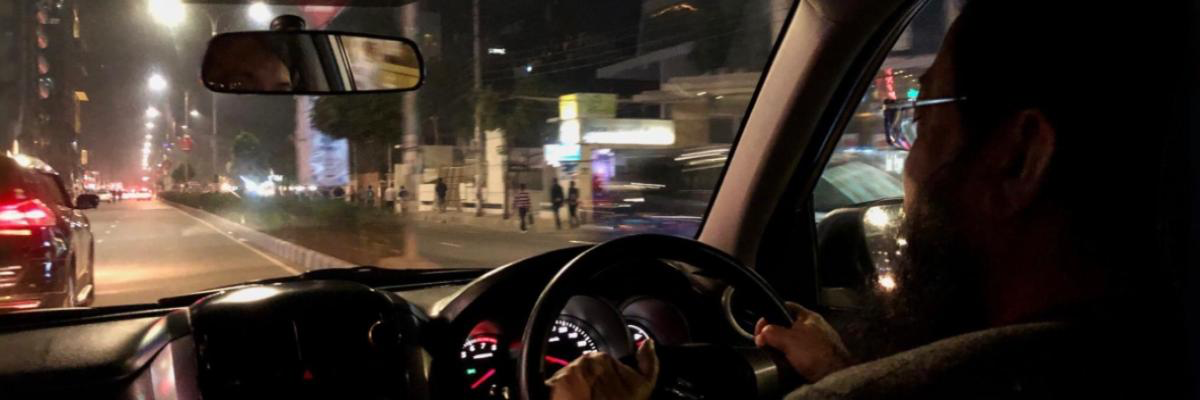
For many drivers, the transition from day to dusk brings a sense of unease. As the sun sets, the road ahead becomes less distinct, glare from oncoming headlights intensifies, and street signs become difficult to read. If you find yourself gripping the steering wheel a little tighter after dark, you are not alone. Night vision problems are a common complaint, turning what should be a routine commute into a stressful experience. While some reduction in visual acuity is normal in low light, significant difficulty driving at night can indicate underlying eye health issues. Understanding why your eyes struggle in the dark and implementing practical low light vision tips can help you regain confidence and safety on the road.
At Doral Health & Wellness, we are dedicated to providing the East New York community with superior medical care across multiple specialties. Our state-of-the-art facility is equipped with advanced technology to handle all your health needs, including comprehensive eye care. We are committed to offering personalized attention and expert guidance to help you maintain optimal vision and overall well-being.
Understanding the Mechanics of Night Vision
To understand why night vision problems occur, it is helpful to look at how the eye functions. In bright light, your pupils constrict to limit the amount of light entering the eye, and cone cells in the retina provide sharp, color vision. In darkness, your pupils dilate (widen) to let in more light, and rod cells take over. Rod cells are sensitive to low light but do not provide color vision or the same level of sharpness as cones.
This natural physiological shift explains why everyone sees slightly worse at night. However, when the transition is accompanied by halos, starbursts, or blurriness, it suggests that light is not focusing correctly on your retina. This scatter of light is what makes driving at night feel dangerous for many people.
Common Causes of Night Vision Problems
Several conditions can exacerbate the difficulty of seeing in the dark. Identifying the root cause is the first step toward finding a solution.
Cataracts
One of the most frequent causes of night vision issues, especially in older adults, is cataracts. A cataract is a clouding of the eye’s natural lens.
- The Effect – As the lens becomes cloudy, it scatters the light entering the eye rather than focusing it precisely.
- Symptoms – This leads to significant glare and halos around headlights and streetlamps. Drivers often report that oncoming lights look like “starbursts.”
- Solution – Cataract surgery is highly effective. If you suspect cataracts, searching for an “ophthalmologist near me” is crucial for evaluation.
Myopia (Nearsightedness)
Even if your vision seems fine during the day, uncorrected myopia can become more pronounced at night.
- Night Myopia – In low light, the pupil dilates, which can exaggerate small refractive errors that are negligible in bright conditions.
- Symptoms – Distant objects, such as road signs or pedestrians, appear blurry.
- Solution – An updated prescription for glasses or contact lenses often resolves this.
Astigmatism
As discussed in previous articles, astigmatism is an irregular curvature of the cornea or lens.
- The Effect – The irregular shape causes light to focus on multiple points on the retina.
- Symptoms – This results in distorted vision and streaking lights, which are particularly bothersome when driving at night.
- Solution – Specialized lenses can correct the refractive error and reduce glare.
Vitamin A Deficiency
While less common in developed nations, a lack of Vitamin A can lead to nyctalopia, or night blindness. Vitamin A is essential for the proper functioning of rod cells in the retina.
When to See a Specialist
If you find yourself avoiding night driving entirely due to fear or visual discomfort, it is time to seek professional help. A comprehensive exam can determine if your symptoms are due to a simple prescription change or a medical condition like cataracts or glaucoma.
Residents in New York have access to excellent care. Seeking ophthalmology in NY ensures you are evaluated with the latest diagnostic technology. For those in the local community, Brooklyn ophthalmology providers offer accessible, high-quality care tailored to your specific needs. Do not assume your symptoms are just a natural part of aging; effective treatments are often available.
Practical Low Light Vision Tips for Drivers
While medical intervention is necessary for underlying conditions, there are several practical steps you can take immediately to improve your safety and comfort while driving at night.
Optimize Your Vehicle
Your car’s condition plays a significant role in how well you see.
- Clean Your Windshield – A dirty windshield scatters light, increasing glare. Clean the glass inside and out to remove streaks and film.
- Check Your Headlights – Ensure your headlights are clean and properly aligned. Yellowed or foggy headlight covers can reduce light output significantly.
- Dim Dashboard Lights – Bright dashboard lights can compete with the darkness outside, causing your pupils to constrict and reducing your ability to see the road. Lower the interior brightness.
Adjust Your Driving Habits
Changing how you drive can reduce the strain on your eyes.
- Look Away from Glare – Do not look directly at the headlights of oncoming traffic. Instead, look toward the right side of the road, using the white line as a guide until the car passes.
- Increase Following Distance – Depth perception is reduced at night. Leave more space between you and the car in front of you to allow for longer reaction times.
- Take Breaks – Night driving requires more intense focus, which can lead to eye fatigue. If you are driving long distances, stop frequently to rest your eyes.
Utilize Anti-Reflective Coating
If you wear prescription glasses, ask your eye doctor near me about anti-reflective (AR) coating.
- Benefit – AR coating reduces the reflection of light off the front and back of your eyeglass lenses.
- Result – This allows more light to pass through to your eyes, improving vision acuity and significantly reducing the halo effect from streetlights and headlights.
The Role of Dry Eyes
Dry eye syndrome is an often-overlooked contributor to night vision problems.
- The Connection – The tear film on the surface of your eye is the first lens that light passes through. If your eyes are dry, the surface becomes irregular, scattering light and causing blurriness.
- Nighttime Dryness – Eyes tend to be drier at night after a long day of use.
- Relief – Using lubricating artificial tears before you start driving can help smooth the eye’s surface and improve visual clarity.
Protecting Your Long-Term Vision
Preventative care is the best way to maintain good night vision. Conditions like glaucoma and macular degeneration can permanently impact your ability to see in low light if left untreated.
- Regular Exams – Schedule a comprehensive eye exam at least every two years, or more often if recommended by your doctor.
- Sun Protection – Wear sunglasses during the day. Excessive exposure to UV rays can damage the eyes and potentially worsen night vision over time.
- Healthy Diet – Consuming foods rich in antioxidants, such as leafy greens and carrots, supports retinal health.
Why You Shouldn’t Ignore the Signs
It is easy to dismiss difficulty driving at night as a minor inconvenience, but it is a safety issue that affects you, your passengers, and other drivers. If you notice a decline in your ability to see in the dark, do not wait for a near-miss accident to take action.
Whether you need cataract surgery, a new prescription, or treatment for dry eyes, a qualified specialist can help. Searching for an “ophthalmologist near me” allows you to find a partner in your eye health journey. By addressing night vision problemsproactively and utilizing low light vision tips, you can navigate the roads with confidence, regardless of the hour.
Your safety on the road starts with clear vision. To schedule a comprehensive evaluation of your night vision with our expert specialists, contact Doral Health & Wellness today at 1-718-365-2555 or visit us at 1797 Pitkin Avenue, Brooklyn, New York 11212. Our team is dedicated to providing the detailed care and advanced solutions you need to see clearly day and night. For general information about Doral Health & Wellness services, you can contact or email info@doralhw.org.