A pterygium, often called “surfer’s eye,” is a common, noncancerous growth of the conjunctiva that can extend onto the cornea. While it may begin as a small cosmetic concern, it can lead to irritation, redness, and even vision problems if it grows large enough. For those affected, pterygium surgery offers a definitive solution. This procedure for eye growth removal is designed to restore the eye’s smooth surface and improve comfort and vision. Understanding the surgical process, recovery, and methods to minimize the pterygium recurrence risk is essential for anyone considering this treatment.
At Doral Health & Wellness, we are proud of our commitment to providing integrated interdisciplinary health services in an innovative medical facility dedicated to the health and well-being of our patients. Our team of specialists offers trusted medical treatments and personalized quality care to guide you through every step of your health journey. We are here to support you with expert advice and state-of-the-art care.
What is a Pterygium and Why Does It Occur?
A pterygium is a wedge-shaped growth of fleshy tissue that develops on the conjunctiva, the clear membrane covering the white part of your eye. It most often appears on the side of the eye closer to the nose and grows toward the pupil.
The exact cause is not fully understood, but prolonged exposure to ultraviolet (UV) light is considered the most significant contributing factor. Other environmental irritants play a role, making this condition more common in individuals who spend a great deal of time outdoors in sunny, windy, or dusty climates.
Symptoms can range from mild to severe and may include:
- Redness and inflammation
- A gritty or burning sensation
- Feeling as if something is in the eye
- Dryness
- Blurred vision, if the growth extends over the cornea
When is Pterygium Surgery Necessary?
Not all pterygia require surgical intervention. If the growth is small and causes only mild, occasional irritation, an eye doctor NYCresidents trust may recommend conservative treatments like lubricating eye drops or steroid drops to manage inflammation.
However, eye growth removal becomes necessary when:
- The pterygium grows large enough to block vision by covering the cornea.
- It causes significant astigmatism by changing the shape of the cornea.
- Conservative treatments fail to relieve persistent discomfort and redness.
- The cosmetic appearance of the growth becomes a significant concern for the patient.
The decision to proceed with surgery is made in consultation with your ophthalmologist after a thorough evaluation of your symptoms and the pterygium’s impact on your eye health.
Understanding the Pterygium Surgery Procedure
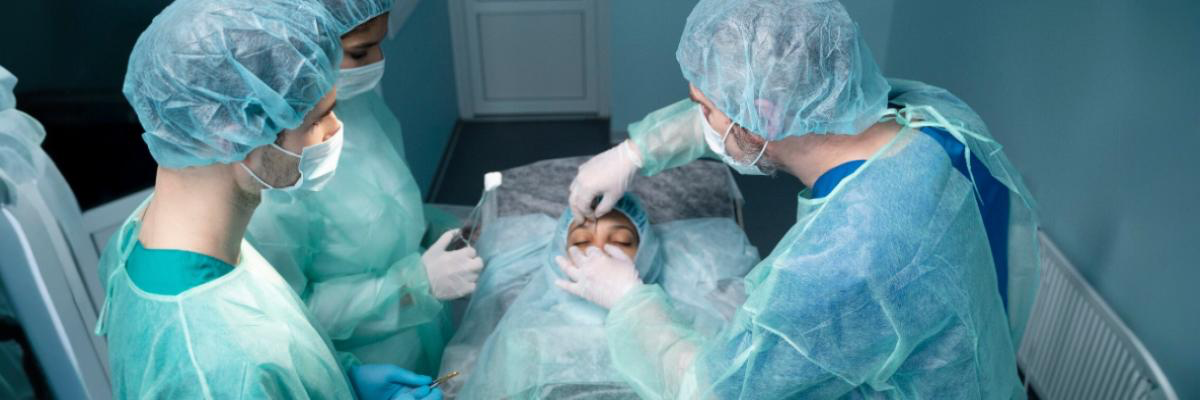
Modern pterygium surgery is a sophisticated outpatient procedure designed not only to remove the growth but also to prevent it from coming back. The operation is typically performed with local anesthesia and takes between 30 and 45 minutes.
The Bare Sclera Technique
An older method involved simply excising the pterygium, leaving the underlying white of the eye (the sclera) bare to heal on its own. While simple, this technique is associated with a very high pterygium recurrence risk, with rates as high as 80%. For this reason, it is rarely used today.
Conjunctival Autografting
This is the current gold standard for pterygium surgery.
- Removal – The surgeon carefully removes the pterygium tissue from the cornea and conjunctiva.
- Grafting – A thin piece of healthy conjunctival tissue is harvested, usually from underneath the upper eyelid of the same eye. This tissue graft is then used to cover the bare area where the pterygium was removed.
- Adhesion – The graft can be secured in place using fine, absorbable sutures or a special surgical adhesive known as fibrin glue. The glue technique often results in less post-operative discomfort and a faster recovery time.
This method significantly lowers the pterygium recurrence risk to between 5% and 10%.
Minimizing Pterygium Recurrence Risk
The primary goal after removing the growth is to prevent it from returning. The conjunctival autograft technique is the most important factor in achieving this. In addition, your surgeon may use adjunctive therapies for cases with a high risk of recurrence.
- Amniotic Membrane Transplantation (AMT) – In some cases, a graft made from amniotic membrane (the innermost layer of the placenta) is used instead of or in addition to a conjunctival autograft. This special tissue has anti-inflammatory and anti-scarring properties that promote healing and reduce recurrence.
- Mitomycin C (MMC) – This is a medication that can be applied to the surgical area to inhibit the regrowth of tissue. Its use is typically reserved for aggressive or recurrent pterygia due to potential side effects.
Your surgeon at the ophthalmology clinic in Brooklyn will determine the best approach for your specific case.
What to Expect During Recovery
Proper post-operative care is crucial for a smooth recovery and a successful outcome.
- Immediately After Surgery – You will go home with a patch and shield over the operated eye, which is usually removed the next day at your first follow-up appointment. It is normal to experience some discomfort, scratchiness, and light sensitivity.
- The First Week – The eye will be red and may feel irritated. You will be prescribed antibiotic and steroid eye drops to control inflammation and prevent infection. It is critical to use these drops exactly as directed. Rest is important, and you should avoid strenuous activity.
- Weeks 2 to 4 – The redness and irritation will gradually subside. You will continue to use eye drops as prescribed by your doctor. Most patients can return to work and normal activities within a few days to a week, but you should avoid swimming and exposure to dusty or dirty environments for several weeks.
- Long-Term Care – Consistent use of UV-blocking sunglasses when outdoors is the single most important step you can take to prevent a new or recurrent pterygium.
Attending all follow-up appointments with your “ophthalmologist near me” is essential for monitoring the healing process.
A pterygium can be a source of significant discomfort and visual disturbance, but effective treatment is readily available. Modern pterygium surgery, particularly the conjunctival autograft technique, offers an excellent solution for eye growth removal with a low pterygium recurrence risk. By understanding the procedure and committing to the recovery process, patients can achieve a successful outcome, restoring comfort and clarity to their vision. If you are struggling with a pterygium, a consultation with a qualified ophthalmologist is the first step toward finding lasting relief.
Your ocular health is our priority. To receive a comprehensive evaluation and a personalized treatment plan, we invite you to connect with our dedicated medical team. Contact Doral Health & Wellness today at 1-718-365-2555 or visit us at 1797 Pitkin Avenue, Brooklyn, New York 11212. We are committed to providing the supportive and expert care you deserve. For general information about Doral Health & Wellness services, you can contact or email info@doralhw.org.