Pain Management

Knee Injections

Targeted relief for knee pain and inflammation.

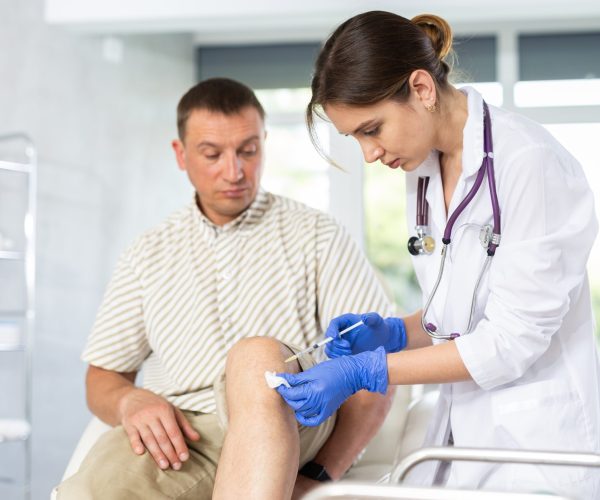
Young,Female,Doctor,Performs,Intra-articular,Injection,Treatment,Of,Knee,Bursitis

What are Knee Injections?

Knee injections involve delivering medication directly into the knee joint to reduce pain and inflammation. Common substances include corticosteroids, hyaluronic acid (such as Supartz), or biologic treatments like platelet-rich plasma (PRP). These injections are often used for osteoarthritis, ligament injuries, or chronic knee pain that doesn’t respond well to oral medication or physical therapy.

This procedure helps to:

  • Reduce pain and inflammation in the knee.
  • Improve joint mobility and comfort.
  • Delay or avoid knee replacement surgery.
  • Support physical rehabilitation.
  • Enhance overall quality of life.

What to expect after Knee Injections?

Relief may be felt within days, though the timeline depends on the type of injection. Corticosteroids work quickly, while hyaluronic acid and PRP may take weeks to provide noticeable improvement. Some mild swelling or stiffness may occur initially.

  • Temporary soreness or swelling at injection site.
  • Gradual pain relief over days to weeks.
  • Little to no downtime required.
  • Improved range of motion.
  • Relief lasting weeks to months.

Why is it performed?

  • To manage osteoarthritis-related knee pain.
  • To reduce inflammation from injury or overuse.
  • To improve mobility without surgery.
  • To support physical therapy programs.
  • To provide non-surgical alternatives for chronic pain.

Risks and Considerations

  • Mild pain or swelling after injection.
  • Low risk of infection.
  • Rare allergic reaction to injection material.
  • Temporary flare in symptoms.
  • Not always effective for severe joint damage.

Early detection is important for managing the condition and preventing further complications.

Schedule a consultation today.

FAQs

Is the procedure painful?
The injection itself feels like a quick pinch, with mild pressure inside the joint. Many patients tolerate it well, and discomfort usually subsides within minutes.
The procedure is usually completed in 10 to 20 minutes, including preparation. Patients can walk out immediately after.
Yes, knee injections are outpatient treatments. Patients typically return home right after, sometimes with a small bandage over the site.
It’s best to rest the knee for 24 hours, avoiding strenuous activity. Applying ice can reduce any temporary soreness or swelling.
If severe swelling, redness, fever, or worsening pain occurs, you should seek medical attention immediately to rule out complications such as infection.

Doral Health & Wellness Pain Relief Department

Doral Health & Wellness Pain Management Center is dedicated to helping you find relief from chronic pain.

Our compassionate specialists develop individualized treatment plans using the latest techniques and therapies, ensuring a holistic approach to your pain management journey.

Doctor assisting an older man in pain while helping him sit up.

Pain Management

More Pain Management Procedures

Health Corner

Recent Articles

Perform Your Search Within the Site

Just write what you want and you will find it.

Generic selectors
Exact matches only
Search in title
Search in content
Post Type Selectors